Brokerage Options for New Agents on the Treasure Coast
What this video covers
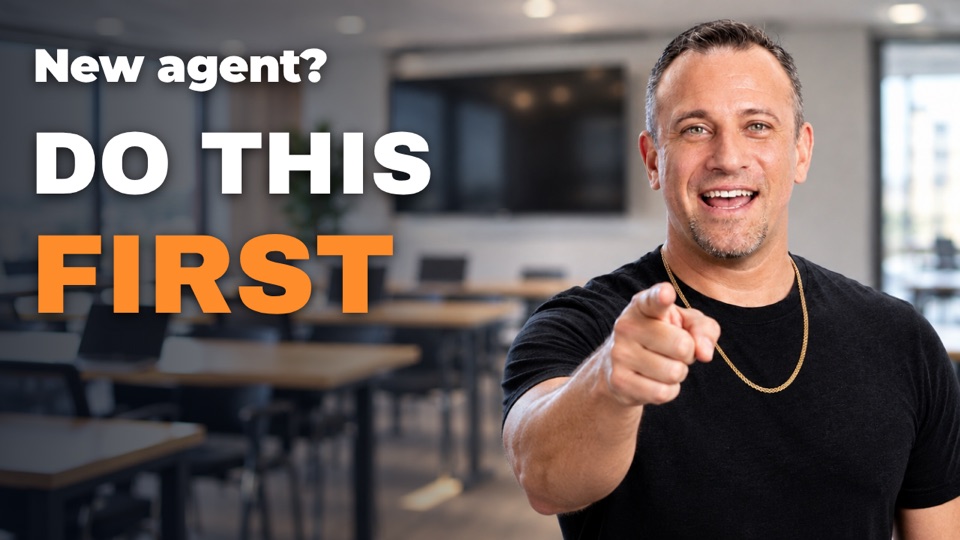
How to choose your first brokerage on the Treasure Coast. It comes down to five things: structured training beyond pre-licensing, a broker or mentor you can reach, the technology that comes with your agreement, accountability without micromanagement, and a clear 90-day roadmap. The commission split matters, but only next to every fee and what you get for it.
Read the transcript
Why the split isn't the full picture
0:00 If you just got your real estate license on the Treasure Coast and you are trying to figure out which brokerage do I join, I wanna save you from some of the most common mistakes I see new agents make. First, they lead with the commission split. I get it. It seems like the most important number, but the split is only one variable in a much bigger equation, and if you optimize for the wrong variable, it can cost you significantly more than it actually saves you.
Three brokerage models compared
0:27 Let me give you three real world examples that you'll find here on the Treasure Coast and really anywhere national. The capping model, competitive split with a cap sounds great, but look closer, per transaction fees, quarterly training fees, tech access fees, annual compliance charges. A new agent doing six to eight deals in a year may never even hit the cap, and those stacking fees can add up to hundreds if not thousands of dollars that you may not have budgeted for.
0:58 Second, the virtual model. Lower cap, modern branding, clean economics, but everything's digital. Training is pre-recorded. Your broker is in another city or state. Support comes through a ticket system. When you need help with a counter offer at 4:30 on a Friday, there's a real gap between support available and support accessible.
1:25 Third, the 100% model. You keep every dollar. The trade off, high flat fees per transaction, minimal broker involvement, no CRM, no marketing tools. It's built for seasoned producers. For a new agent, it's like being handed a desk and told good luck. The point isn't that any of these are bad. Each one works for somebody.
1:48 The point is that the split headline is never the full picture. The better question is, what does my actual take home look like after all costs, and what am I getting in return for the difference?
Structured training and ongoing support
2:00 Structured training and ongoing support. What does it look like? Every broker just says they offer training, so the question isn't whether they have it, it's what actually looks like day to day.
2:11 Strong training for a new agent means structured onboarding process for your first 30 to 90 days that goes beyond here's your login and here's how to submit a contract. It means ongoing weekly or biweekly skill building sessions. It means real world practice, scripts, role play, contract review, listing presentation prep, and it means the training adapts to where you are, not a one size fits all curriculum.
2:42 Here's a helpful test. Ask any brokerage you're considering to show you their training calendar for the next 90 days. Not a brochure, the actual calendar. If they can't produce one, that should tell you something.
Broker access: who do you call?
2:55 When I need help, who do I call? When you're new, questions come up constantly. You'll be mid-conversation with a client and realize you don't know the answer.
3:06 You'll get a counter offer that doesn't make sense. You'll need a second set of eyes on a listing agreement before you send it. In those moments, what matters is whether you can reach your broker quickly and directly, not through a support ticket, not through a voicemail that gets returned in 48 hours, not through a Facebook group where you hope someone sees it and responds.
3:30 See, the size of the brokerage matters here, but not in the way most people assume. A large brokerage will provide excellent mentorship if the structure supports it. A small brokerage can fail at it if the broker is too busy with their own production. What you're looking for is a clear answer to a simple question.
3:51 When I need help, who do I call? And will they actually answer?
Your tech stack in 2026
3:57 Your tech stack in 2026 is massively important. As a new agent in 2026, your minimum tech stack needs to include a CRM for managing contacts and your pipeline, a professional website, email and text marketing tools, transaction management software, and basic content or design tools for social media. When evaluating brokerages, ask specifically what technology is included in your agreement and what you'll need to source on your own.
4:29 Some brokers bundle a complete tech stack. Others offer a high split, but leave you to piece together your own tools, which can add up to $300 to $500 a month, even more, in cost that you didn't expect. The agents and brokerages integrating technology into how they run their business day to day, their pro prospecting, their follow up, their content, are pulling ahead.
4:54 Ask whether your brokerage teaches you how to implement these tools. Not just use them, but operationally how to use them, or just shows you that they exist.
Culture: accountability vs. micromanagement
5:03 Do they offer accountability or is it micromanagement? See, new agents need structure, that's not the same as needing someone looking over your shoulder all day.
5:13 The best brokerage cultures for new agents create an environment with clear expectations, regular check-ins, and genuine support when you are struggling, without making you feel monitored or bad that you didn't know. You wanna feel like you're building a business with guidance, not completing assignments for a supervisor. Easiest way to evaluate this?
5:38 Talk to agents that are already there. Ask them, how does your broker hold you accountable on basis? The answer tells you more than that recruiting presentation is gonna tell you.
What your first 90 days should look like
5:50 What should your first 90 days look like? If your brokerage can't tell you exactly what your first days will look like, what you'll learn, what you'll do, what milestones you should hit, that's a gap worth paying attention to.
6:05 The best onboarding programs map out a phased progression. Month one is foundation, learning systems, setup, building your database. Month two is activity, conversations, open houses, lead generation. Month three is conversion, refining your approach, getting deals under a contract. They include accountability checkpoints that adapt to your time commitment and connect your every activity to an actual business outcome.
6:33 Having a structure on day one gives you a path forward rather than sitting at your desk wondering, what do I do next? Ask any brokerage, what does my onboarding roadmap look like and how long does it run? If the answer is a one day orientation and some recorded videos, that's important information.
The Treasure Coast brokerage landscape
6:55 The Treasure Coast landscape. Some context on the Treasure Coast specifically. This market, Martin County, St. Lucie County and Indian River County, includes roughly 9,000 to 10,000 licensed agents, not realtors, licensed agents. It's competitive. You'll find national franchises like Keller Williams and RE/MAX with strong local cloud-based brokerages like eXp and Real Broker offering competitive economics with virtual support, regional and independent firms with personalized attention, and hybrid models combining modern economics with local in-person support. See, no model is inherently better. The right fit depends on where you are, how you learn, and where you wanna be in the next three to five years.
5 questions to ask any brokerage
7:42 I wanna leave you with five questions for any brokerage conversation. One, what does my actual take home look like after all fees? Get the full breakdown. Two, can I see the training schedule for the next 90 days? Not the brochure, the actual calendar. Three, am I building my own asset here or am I building yours?
8:06 Who owns my database? Who owns my brand and my client relationships? Four, does my broker actually know my business? Can they give me a specific plan? And five, where does this brokerage take me in the next three to five years? These aren't designed to trip anyone up. They're designed to give you real comparable information.
Next steps
8:26 At LYNQ Real Estate, we built our model to address the gaps new agents run into most often: an integrated tech stack, structured training, direct coaching access, and our First 100 Days onboarding program. That said, the right brokerage is the one that fits your situation. What matters is that you make a decision with clear information and a solid framework.
8:49 If you want help working through this, I do a 15 minute growth strategy session where I look at your situation and talk you through options. No pitch, just a real authentic conversation. If you're interested, check out the link in the description. And I hope to see you in our next videos. Thank you.
 BOOK A GROWTH STRATEGY SESSION
Want to talk it through?
30 minutes about where you are and where you want to be. At the office or on Zoom.
Book a Growth Strategy SessionMORE VIDEOS